The Australian Smart Guide to Perfect Blinds
Wiki Article
The Hidden Layer - How Blinds Can Cut Your Energy Costs By Half
In the Australian search for comfort in the home we tend to concentrate on the big-ticket items: the reverse-cycle air conditioning unit, the ceiling insulation, the high-performance refrigerator. Blinds on windows are usually neglected as a significant energy efficient player. The windows in our climate with its scorching summers or chilly winters are the main source of unwanted heat. In addition to privacy and style choosing the best window furnishings can make a real difference in the performance of your home. The secret lies in not the material, but rather the engineering that's hidden to reflect and retain heat.
In order to comprehend the opportunity and the challenge, it is important to first know the root of the problem and the physics. Glass is a terrible insulation. In summer, it functions as a magnifying glass, which allows shortwave solar radiation be absorbed by your home, where it is absorption by your flooring and furniture. It then radiates back as longwave heat. It is then being trapped within the house, causing the infamous greenhouse effect. In winter, your heater's precious heat escapes directly through the window. Single-layer blinds, which are simple fabrics or a vinyl piece, offer a modest shield. While they block glare however, they aren't able to block convective transfer of heat. Designs that blend trapped air with reflective technology are the real winners.
Two specific blind styles enter the spotlight as unnoticed homeowners' heroes thermal-backed roller blinds, and honeycomb (or cellular) blinds.
The Reflective Barrier The Reflective Barrier: Thermal-Backed Roller Blinds
These are similar to the foil bags you'd employ to protect your windows. A standard blockout roller blind becomes an efficient thermal unit by adding an extremely thin, and often metallic, layer that is attached to the fabric's back. This layer is the main element. In the summer, this layer can be turned to the side after the blinds have been lowered. It is a kind of mirror which reflects the sunlight's heat before it reaches the glass. It's a powerful, proactive measure. In winter it works the opposite way. If you lower the blind it will reflect the face your area and reflect the heat. The process is straightforward, elegant, yet highly effective. It transforms the traditional blind into a powerful system for controlling the temperature. It is recommended to look for blinds with a "Total Solar Energy Rejected (TSER)," which defines the amount of solar energy that is turned down. The thermal-backed blind specifically, is able to block more than 70 percent of the heat generated by the sun.
Honeycomb Blinds (Cellular Blinds) The Insulating Trap
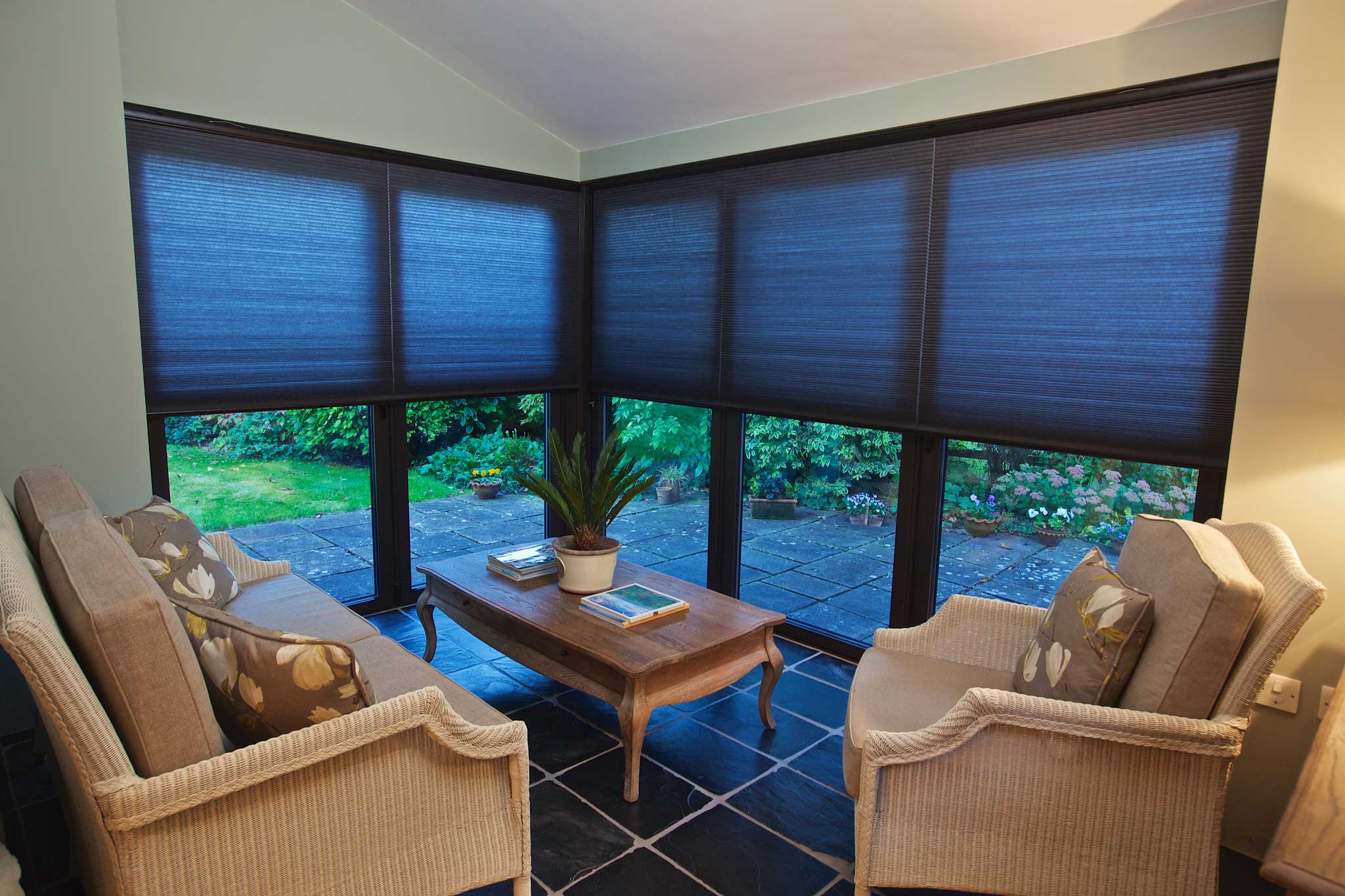
While thermal blinds reflect honeycomb blinds, they insulate with amazing structural design. The hexagonal pattern of their cells, reminiscent of beehives is not only a design element. These cells function as mini-insulators. When the blinds are closed, the vertical columns enclose pockets still air. When it is static, air is among nature's finest insulations. This is the basis for double-glazed windows and cavity wall insulation. The air pockets that are trapped create an enormous buffer between the glass of your window and your house. They dramatically slow the transfer of heat both ways. In a heatwave, the blistering temperature of the glass is slower to heat the air inside the cells, which hinders the heating of your home. The glass's cold temperature keeps your room warm on the coldest of days. Double-cell designs offer a greater air barrier with two layers of stacked cells. Honeycomb blinds are a dual-season performance. This means they can be used in both the winter and summer seasons.
The right product isn't enough. You must use it wisely. Sealing is essential. Efficiency plummets with gaps. Here, professional measurements and installation are crucial. A blind mounted inside a window recess will create an improved seal on four sides than one hanging from the frame. For face-fit installations side channels can be used to help aid in the installation and eliminate air and light gaps. Operation is also key. The summer sun must be blocked by completely closing the blinds at times of high heat. To stay warm during winter, shut them right after the sun goes down. It will serve as a insulating drape over a drafty doorway.
When consulting with suppliers, shift the conversation from just colour and cost-per-square-metre. Ask technical questions to reveal the true performance of the product "What is this honeycomb design's R-value, or insulating rating? "Is this roller blind reflective thermal backing and what is its percentage TSER?"
The financial argument is convincing. The initial cost of honeycomb or thermal blinds could be more expensive than those with the standard models. However, it should not be viewed as an expense but rather as a long-term investment. The cost savings of your heating and air conditioning systems can be substantial. The energy bill savings can more than pay for the blinds over the course of their life, which is typically a decade. You are not just buying blinds for your windows; you are buying a smaller and less frequent power bill.
The choice of energy efficient window blinds is an important element in making a more sustainable and resilient Australian home. Smart design is the key to coping with Australia's demanding climate instead of fighting it with force air conditioning. It makes the home more comfortable and peaceful with less noise, less drafts, and more consistent temperatures. This insulation layer is a reliable way to improve household efficiency in a time of rising cost of energy and growing environmental awareness. This simple change pays for itself in comfort and savings year after year. Check out the top rated blinds for blog info including 15 blinds, fit shades, 100 blinds, blinds to fit, blinds 101, local window shades, order window shades, door with blinds, blinds discounts, blinds custom and more.
The True Test: What Happens After Your Blinds Are Fitted
In the Australian industry of blinds, the moment blinds are put in place can feel like the final finish line. The boxes have been unveiled and your windows have been adorned with new furnishings then the installer takes away. But for a daily-used product that will be exposed to harsh sunshine and last for at minimum 10 years This isn't the end. It's only the beginning. After-sales services are often not a part of the part 2 of the purchase contract. The after-sales services include the quality installation of your product as well as instructions on maintenance for the ongoing period and a clear process to follow when it comes to repairs or adjustments if needed. This is when a transaction transforms into an ongoing relationship and the real character of a provider is revealed.
The most important and first aspect of after-sales services is installation. A professional installer is more than a fitting. They're the ultimate control of the quality. They have an impact on the quality and efficiency of your blinds. A reputable service ensures the installer is a member of the company or a reliable long-term subcontractor, not a random tradesperson sourced from an online platform. They have the right tools, regardless of whether your home is built of double bricks, steel studs, or concrete. They do not just supply the required components and accessories, but also help you put them in place. They show you how to operate each blind correctly, including the proper way to attach cords to the cleat or set up a remote. They clean up meticulously and leave no mess. Before leaving, they should leave a contact point that is direct, like a phone number or email for the local office. This level of finish will be your first real experience of aftercare.
The other pillar is proactive maintenance advice. Blinds aren't "fit and forget" things. Their life expectancy is determined by the quality of their cleaning and handling. This isn't something that an organization that cares about your satisfaction over the long run leaves to chance. They must provide explicit, written instructions on how to care for your furniture specific to the materials you've chosen. The guidelines are not general however, it is more specific for the specific microfiber cloth you use as well as the pH neutral cleanser to use for your fabric sunscreen and the warning against using products containing oil on your Venetians made from wood; the schedule of vacuuming honeycomb blinds with a soft brush to stop dust from getting into the cells. Experts may recommend seasonal adjustments such as checking the tension of your cord before summer, or making sure that motorized blinds are charged. This is intended as a preventative measure. It will allow you to avoid common problems which could lead to premature wear or warranty issues. This is a sign that your supplier sees blinds as an investment, rather than merely a sales pitch.
Even with the highest quality installation, care and maintenance, you will need the third pillar - a readily accessible repair support - at some point. The cord could break and a motor might slow down or a slat might be damaged. It is your supplier's final test for their after-sales philosophy. It is important to determine whether they have an efficient local service for customers. A trustworthy company has a knowledgeable service coordinator or local contact that knows your history. They should be able to identify problems via phone and schedule a visit from a technician with common parts and meet warranty claims without fighting. If a company assigns repairs to a third party handyman anonymously or directs customers to a website of an offshore manufacturer will create frustration, delay, and, often, a substandard repair.
This particular structure is crucial in motorised and intelligent systems. Technology can create a new layer of complexity. Does the provider have an expert who is competent to identify issues with your blind motor or home hub? Can they change the firmware, or even replace a power supply? Their after-sales capabilities must be in line with the quality of the products they sell. A company that sells products that are automated but does not have the support team to keep them up and running is a potential risk.
To properly assess a supplier, you must take into account the entire landscape of after-sales. Don't just ask, "Is the installation and warranty included?" Ask questions that are scenario-based: "If my blind has an issue six month after its installation, how should I proceed?" Who do I call first?" Are spare parts on hand for your motors locally, or are they required to be purchased from overseas? "If repairs are required under warranty, do you charge the call-out cost?" The answers will show how prepared they are. A concise and confident answer which identifies a local representative and commits to prompt service will show credibility.
The ultimate value of robust customer service is measured in the security of your mind and the longevity of your product. It helps protect your investment. Blinds that the manufacturer can adjust, repair, or even maintain can last far longer than one that falls down as soon as a tiny issue occurs. It will help you save money because it prevents the need for costly replacements when simple repairs are all you need.
In the Australian market in which homes are constructed to last for decades, and where interiors are substantial investment, a long-term perspective is vital. Dealers who have showrooms, local installers and an excellent reputation within the community are more accountable. They provide a full service offering, from skilled fitting, expert advice and prompt repair. If you choose a service company that offers this type of service, you don't just buy an item. Instead, you choose an expert who will be there for you throughout the lifetime of the window blinds you choose to purchase. This will ensure that the view you love today will be preserved over the years to the future. It also lets you be sure that, in the event that a cord breaks or the remote not working the local phone number will resolve the issue. It is that unwritten but crucial clause that is in your contract.
